
What is PCOS?
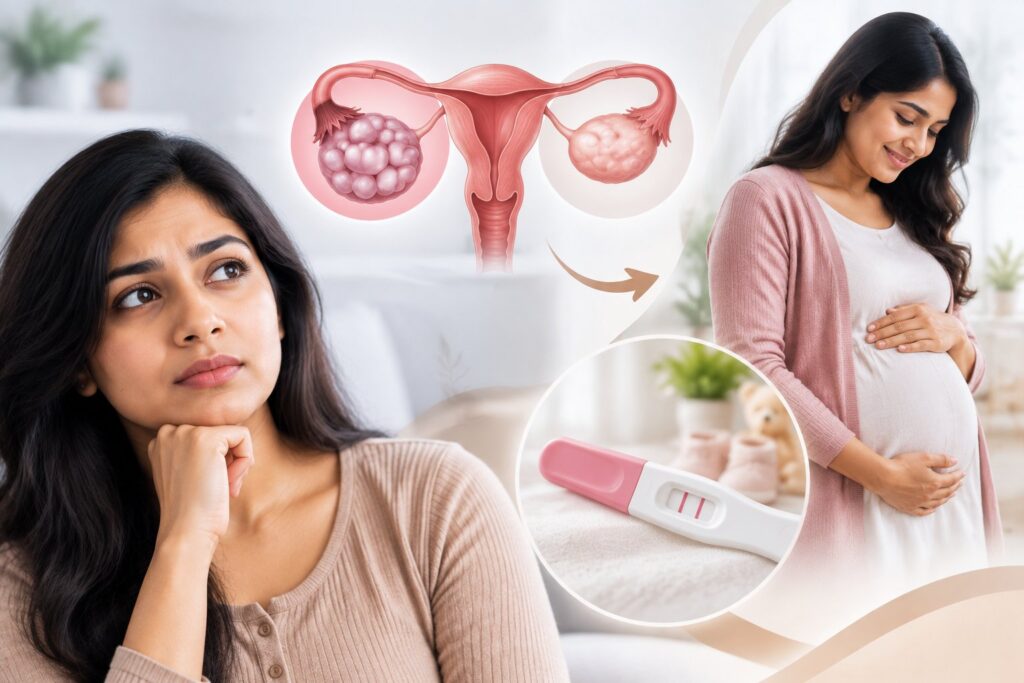
Polycystic Ovary Syndrome, or PCOS, is a common health problem. It affects how a woman’s ovaries work. Many women with PCOS have irregular periods. Some may have extra hair growth or acne. PCOS can also cause small cysts on the ovaries. Because of these changes, PCOS can impact a woman’s ability to get pregnant. According to the CDC, PCOS is one of the main causes of infertility in women. However, many women with PCOS do become pregnant, sometimes without medical help.
How Does PCOS Affect Fertility?
PCOS affects fertility in several ways. First, it can make periods irregular or stop them. As a result, it becomes harder to know when ovulation happens. Ovulation is when an egg is released from the ovary. Without regular ovulation, getting pregnant is more difficult. In addition, PCOS can cause hormone imbalances. These changes may affect the lining of the uterus, making it harder for a fertilized egg to attach. Still, many women with PCOS do ovulate sometimes, even if not every month.
Can Women With PCOS Conceive Naturally?
Yes, women with PCOS can conceive naturally. Although it may take longer, natural pregnancy is possible. Many women with PCOS have healthy pregnancies without fertility treatments. However, the chances depend on several factors. For some, simple lifestyle changes can help restore regular ovulation. Others may need medical support. Even so, it is important to remember that every woman’s body is different. Therefore, some may find it easier to conceive than others.
Factors That Influence Natural Conception With PCOS
Several factors can affect the chances of conceiving naturally with PCOS. For example, the following can play a role:
Because each woman is unique, these factors may impact everyone differently. Even so, understanding them can help guide your next steps.
Tips to Improve Fertility With PCOS
There are several ways to boost fertility when living with PCOS. For instance, you can try these tips:
Additionally, some women find that working with a dietitian or counselor helps. Small changes can make a big difference over time.
When to Seek Medical Help
Sometimes, natural methods may not be enough. If you have been trying to get pregnant for over a year (or six months if over age 35), it is wise to see a doctor. Also, if you have very irregular periods or no periods at all, seek help sooner. A healthcare provider can check for other issues and suggest treatments. Early support can improve your chances of a healthy pregnancy. Remember, you are not alone, and many women with PCOS have successful pregnancies with the right care.
For personalized guidance on PCOS and pregnancy, consult a specialist atKrishna Vikas Hospital. They can help you understand your options and support your journey to parenthood.